Choosing a China-based manufacturer for Wholesale Bulk Supplement Supply involves more than comparing prices. Buyers need clear product specifications, dependable production capacity, and responsive communication. Small details matter. A sample label, a batch record, or a delayed reply can reveal how carefully a supplier manages routine work. This guide outlines practical points for evaluating manufacturers, from ingredient sourcing and formulation support to packaging options and order planning. It also explains which questions can help buyers compare suppliers on consistent terms.
Reliable suppliers should be able to describe their quality controls and provide relevant, verifiable documentation for review. Ask how ingredients are identified, how batches are tracked, and how finished products are checked before dispatch. Request current certificates or test reports where applicable, and confirm that their scope matches the product and facility being discussed. Clear answers build confidence. Vague promises do not. Minimum order quantities, lead times, sample costs, and export packaging should also be confirmed in writing. These details shape budgets and launch schedules more than a sales brochure might suggest.
No single manufacturer will suit every business. Some offer broad customization but require larger orders; others may be more flexible with standard formulas. Trade-offs happen. Buyers should assess their own needs, verify claims independently, and allow time for samples and document review. Even a promising supplier may have gaps, and that deserves a closer look. The aim is not to find a perfect pitch, but a capable partner whose processes, communication, and product specifications can be checked before a long-term commitment.
The global dietary supplements market reached an estimated US$177.5 billion in 2023, according to Grand View Research. The firm projects a 9.1% compound annual growth rate from 2024 to 2030. That scale creates opportunities for bulk supplement manufacturers, but market growth does not guarantee demand for every ingredient or format. Buyers still need to match production capacity with actual sales forecasts.
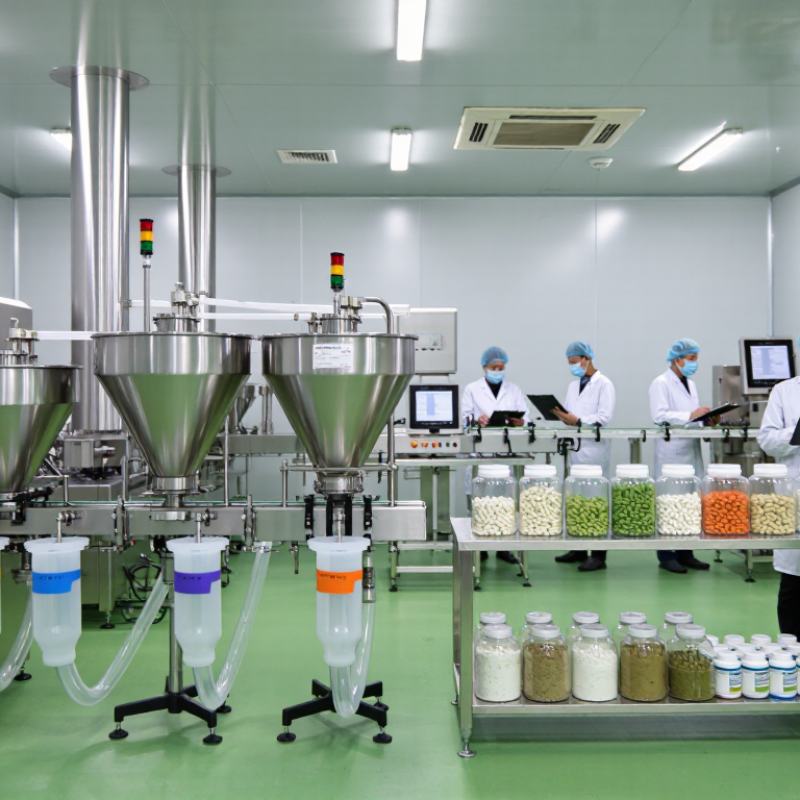
Bulk supply depends on more than a low price per kilogram. A reliable manufacturer should document ingredient identity, batch traceability, testing methods, and storage conditions. Ask how samples are handled and how specifications are checked when a production run changes. Small details matter. A damp carton or inconsistent powder texture can signal problems before a finished product reaches consumers.
The US$177.5 billion figure describes a broad category, not a precise measure of bulk manufacturing revenue. Market estimates can differ because reports define supplements and regions differently. That is worth remembering when comparing suppliers. A polished certificate alone is not enough; buyers should verify records and discuss quality controls directly. No process is perfect, and supply plans may need revision when harvests, shipping, or demand shift.
| Market or Sourcing Dimension | Data / Requirement | What It Means for Bulk Buyers | Reference |
|---|---|---|---|
| Global dietary supplements market | Estimated at US$177.5 billion in 2023. | Market-research estimate covering dietary supplements; definitions and category boundaries can differ between publishers. | Grand View Research, Dietary Supplements Market |
| Market growth outlook | Grand View Research forecasts a 9.1% compound annual growth rate for 2024–2030. | A forecast, not a measured annual growth result. Use the publisher’s stated scope and forecast period when comparing market estimates. | Grand View Research |
| United States dietary supplement framework | The Dietary Supplement Health and Education Act (DSHEA) was enacted in 1994. In general, FDA does not approve dietary supplements for safety and effectiveness before they are marketed. | Buyers should verify supplier quality systems, ingredient identity, specifications, and documentation; FDA’s general premarket role is not a product-quality certification. | U.S. FDA, Information for Consumers |
| U.S. manufacturing requirements | Dietary supplement current good manufacturing practice requirements are set out in 21 CFR Part 111. | For U.S.-market supply, assess whether manufacturing and quality-control records address applicable cGMP requirements. | Electronic Code of Federal Regulations, 21 CFR Part 111 |
| European Union rules for vitamins and minerals | Directive 2002/46/EC establishes EU rules for food supplements, including permitted vitamins and minerals and their sources. | Confirm that ingredient forms and product presentation meet the requirements of the intended EU market; other applicable food rules may also apply. | EUR-Lex, Directive 2002/46/EC |
| China health-food standard | GB 16740-2014, “National Food Safety Standard—Health Food,” is a Chinese national food-safety standard for health food. | For products intended for China, check current Chinese requirements and product classification with qualified regulatory support; rules differ by product and intended claims. | SAMR National Public Service Platform for Standards Information |
| Bulk supplier due diligence | Request a current product specification, ingredient and allergen information, batch-specific certificate of analysis, traceability details, and applicable manufacturing-quality documentation. | These are practical verification documents, not a substitute for checking the regulations of the destination market or independently assessing the supplier. | Buyer due-diligence checklist; requirements depend on product and destination market. |
Note: The US$177.5 billion figure is a third-party market estimate, not an official government statistic. Regulatory statements are summaries; confirm current rules and product-specific obligations before purchasing or placing products on the market.
Check ingredient identity, origin, purity criteria, and available certificates. These details help teams compare suppliers and trace a questionable batch.
Match lot numbers, packaging condition, and documents against the purchase order. Sample and test materials under the quality plan. Pause the process if records do not match.
It should list ingredient quantities, equipment used, and in-process checks. Ask how the supplier manages production schedules, retained samples, and complaints. Details can get overlooked.
Request monthly output, active production lines, batch records, staffing, and backup utilities. Ask whether capacity is available during seasonal demand. A full warehouse proves little.
Request pricing for pilot and repeat orders. Confirm whether the MOQ applies to raw materials, packaging, or finished batches. A low MOQ may still raise unit costs.
Check the lot number, assay result, test method, production date, and release signature. Review relevant contaminant tests, too. A COA has limits.
An ISO/IEC 17025-accredited laboratory can provide a separate comparison with supplier results. Repeat checks periodically, and investigate small discrepancies rather than dismissing them.
Confirm expectations in writing and allow time for review. Testing reduces uncertainty, but it cannot replace careful supplier oversight. A fast process is not always a smooth one.
The global dietary supplement market, valued at $177.5 billion in 2023, creates significant opportunities for businesses seeking dependable wholesale supply. This overview explains how bulk supplement manufacturers support the journey from responsibly sourced raw materials to finished products ready for distribution. It also highlights the importance of clear communication, consistent production capacity, and supply-chain planning as demand continues to grow.
Choosing a Wholesale Bulk Supplement Supply partner requires careful evaluation of minimum order quantities, manufacturing capabilities, and transparent documentation, including certificates of analysis. Strong quality assurance should align with applicable U.S. FDA 21 CFR Part 111 cGMP requirements and include appropriate third-party testing. With the market forecast to grow at an annual rate of 9.1% from 2024 to 2030, suppliers that can demonstrate reliable quality, export readiness, and responsive service may be better positioned to support businesses as they expand into new markets.